
Ever felt your heart race as your toddler drops to the floor—screaming, kicking, red-faced—while strangers stare and you whisper, “What did I do wrong?”
You’re not failing. You’re just facing one of parenting’s toughest (and most normal!) moments.
The good news? Gentle parenting techniques can turn meltdown chaos into calm connection—without yelling, bribing, or time-outs. Let’s walk through 5 simple, science-backed ways to help your little one (and you) feel safe, seen, and settled.
✨ What Is Gentle Parenting Techniques?
Gentle parenting techniques are not about being permissive—or perfect. They’re about responding to big emotions with empathy, setting kind and firm limits, and guiding your child’s behavior through connection—not control .
Think of it like this:
Your toddler’s brain is still under construction. When they’re tired, hungry, or overwhelmed, their emotional “alarm system” blares—and tantrums happen . Gentle parenting helps you co-regulate with them until they learn to self-soothe.
It’s rooted in attachment theory and positive discipline—and research shows kids raised this way often grow up more confident, emotionally aware, and cooperative , .
Table of Contents
🌱 Why Gentle Parenting Techniques Matter for Parents
Let’s be real: Traditional discipline (shouting, threats, time-outs) might stop a tantrum fast—but it doesn’t teach skills. And it often leaves you feeling guilty or drained.
In contrast, gentle parenting techniques:
- Reduce power struggles long-term
- Strengthen trust in your parent-child bond
- Support healthy brain development
- Lower parental stress and burnout
A 2025 parenting trends report found 38% of U.S. moms now identify with gentle parenting—up from 22% in 2022 . Why? Because it works with your child—not against them.
For easy toddler meal ideas, check out our article Best Toddler Meals: Easy Recipes for Parents.”
Real Benefits You’ll See
✅ Fewer epic meltdowns over time
✅ Your toddler learns to name feelings (“I’m mad!”)
✅ Easier transitions (hello, smoother grocery trips!)
✅ Better sleep, eating, and cooperation
✅ Stronger family wellness—and your mental health improves too
5 Simple Gentle Parenting Techniques to Calm Toddler Tantrums
These are doable, even on your most exhausted days. Try one at a time—and celebrate small wins!
1. Pause & Connect First
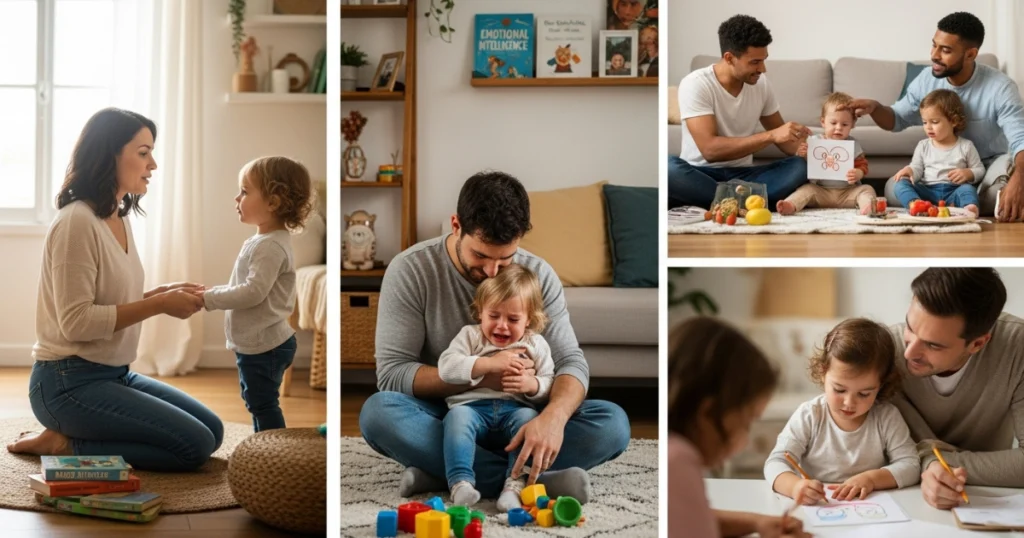
Before correcting, connect. Kneel to eye level. Soften your voice. Say:
“I see you’re upset. I’m right here.”
Why it works: Tantrums spike when kids feel alone in their big feelings. Connection lowers their stress hormones—fast .
💡 Mom Hack: Keep a “calm kit” in your diaper bag—mini stress ball, favorite photo, lavender roller (eco-friendly & soothing!).
2. Name the Feeling + the Need
Toddlers can’t say, “I’m hangry and overstimulated!” So you translate:
“You wanted the blue cup. It’s frustrating when things don’t go your way. And… are you hungry?”
Hunger, fatigue, and overstimulation are the top 3 tantrum triggers, per CDC data , . A quick snack or quiet break often prevents escalation.
🥣 Toddler Meal Tip: Keep protein-rich nibbles handy—cheese sticks, oat bites, banana “sushi” (banana + nut butter + rolled oats). Stable blood sugar = fewer meltdowns.
3. Hold the Boundary—Gently
Gentle ≠ no limits. Example:
“I won’t let you hit. Hitting hurts. You can stomp your feet or squeeze this pillow instead.”
Give two acceptable choices to restore their sense of control.
4. Co-Regulate with Your Breath
Your calm is contagious. Take 3 slow breaths out loud:
“Let’s breathe together… in… and out…”
Place a hand on their back (if they’ll allow it). Your steady rhythm helps their nervous system sync up with yours.
5. Repair & Reconnect After
When calm returns, offer a hug:
“That was tough! I love you—even when feelings are big.”
No lectures. Just love. This builds emotional resilience for life .
Tips for Busy Parents (Because You’re Tired!)
- Prep ahead: Pack “tantrum-proof” snacks and a comfort item (lovey, silky scarf).
- Use transitions wisely: Give 5-minute warnings: “We leave the park in 5… 3… 1!”
- Team up: Agree on 1–2 go-to phrases with your co-parent or caregiver. Consistency helps!
- Eco-friendly win: Swap plastic toys for open-ended, natural ones (wooden blocks, fabric scarves)—less overstimulation, more calm play .
⚠️ Common Mistakes to Avoid
| Saying “Calm down!” | Try: “Your body feels big right now. Let’s get cozy.” |
| Ignoring the trigger (hunger, tiredness) | Check basics first: snack? nap? quiet space? |
| Taking tantrums personally | Remember: It’s not defiance—it’s dysregulation . |
🌿 Best Products & Tools for Gentle Parenting Families
| Category | Top Picks (2025) | Why Parents Love Them |
|---|---|---|
| Comfort Tools | Slumberkins Calm-Down Plush, Hugimals | Soft textures + emotion coaching books |
| Eco-Friendly Snacks | Once Upon a Farm pouches, Yumi bites | Organic, no added sugar—hunger tantrum busters! |
| Sensory Calm-Down Kit | Monti Kids Feelings Flashcards, Mindful Steps Yoga Cards | Helps toddlers name feelings & move energy |
| Sustainable Gear | Bambino Mio cloth diapers, PlanToys wooden toys | Gentle on planet and overstimulated senses |
🌱 Family Wellness Bonus: Try a “quiet time basket” with noise-canceling toddler headphones, a weighted lap pad, and board books about feelings.
👩⚕️ Expert Parenting Insight
*“Gentle parenting isn’t about never getting frustrated—it’s about repairing after. One misstep doesn’t undo your connection. Your child needs a *real* parent—not a perfect one.”*
— Dr. Laura Markham, Clinical Psychologist & Author of Peaceful Parent, Happy Kids
Gentle parenting techniques
Gentle parenting techniques won’t stop every tantrum overnight—and that’s okay. Every time you respond with empathy instead of anger, you’re wiring your child’s brain for resilience, trust, and emotional intelligence.
You’re not just surviving the toddler years.
You’re building a foundation for a lifetime of secure, joyful connection.
You’ve got this, mama. One breath, one hug, one gentle “I see you” at a time.
See also:
👉 [school lunch ideas: 4 simple wraps kids can’t resist]
👉 [How to Create a Calm-Down Corner on a Budget]
👉 [Gentle Sleep Solutions for Toddlers Who Resist Bedtime]
FAQs: Gentle Parenting Techniques
Q: Are gentle parenting techniques the same as permissive parenting?
A: No! Gentle parenting includes clear, consistent boundaries—it’s how you enforce them (with respect, not fear). Kids thrive with both kindness and structure .
Q: Can gentle parenting work for strong-willed toddlers?
A: Absolutely. Strong-willed kids often respond best to connection-based limits. They need to feel heard before they can cooperate .
Q: What if I lose my temper? Does that ruin gentle parenting?
A: Nope! Repair is part of the process. Say: “I yelled. That wasn’t calm. I’m sorry. Next time, I’ll take a breath first.” Modeling accountability is powerful.
Q: Do gentle parenting techniques work for neurodivergent kids?
A: Yes—and many parents of autistic or ADHD toddlers find them especially helpful. Focus on co-regulation, sensory needs, and visual supports.
Q: How soon will I see results?
A: Some parents notice calmer interactions in 1–2 weeks. Big shifts take 2–3 months of consistent practice. Progress isn’t linear—and that’s normal.
Q: Can dads and caregivers use gentle parenting techniques too?
A: 100%! These tools work for any loving adult. In fact, consistency across caregivers deepens the child’s sense of safety.
Q: Where can I learn more without feeling overwhelmed?
A: Start with one technique (like “Pause & Connect”). Try it for 3 days. Small steps build big change. You’re already doing great.
Ready to turn tantrum tornadoes into tender moments?
Bookmark this page—and try just one gentle parenting technique today. Your calm, connected family is waiting. 🌼
1 thought on “Gentle Parenting Techniques: 5 Simple Ways to Calm Toddler Tantrums”
Comments are closed.