

If you’ve been browsing the pet aisle or scrolling through Amazon lately, you’ve probably noticed probiotics for dogs popping up everywhere. Maybe your neighbor mentioned them, or you saw them recommended in a dog health forum. But what exactly are dog probiotics, and how do you know if they’re right for your furry friend?
Dog probiotics are dietary supplements containing beneficial bacteria designed to support your dog’s digestive system. Many US dog owners consider these supplements when their pets experience occasional digestive upset, during diet transitions, or simply as part of their daily wellness routine. While probiotics aren’t medications and don’t treat or cure diseases, they’ve become increasingly popular among pet parents looking to support their dog’s gut health.
Table of Contents
What Are Dog Probiotics?
Dog probiotics are supplements containing live microorganisms primarily beneficial bacteria strains—that may help support the balance of your dog’s gut microbiome. According to veterinary consensus, these “good bacteria” are similar to the naturally occurring microorganisms already living in your dog’s digestive tract.
The concept is straightforward: your dog’s intestines contain trillions of bacteria, both helpful and potentially harmful. Probiotics introduce additional beneficial strains that can help support digestive balance, particularly during times when that balance might be disrupted.
If you’re looking for a real-world example of how probiotics are typically added to a dog’s daily routine, this step-by-step guide on using FortiFlora for dogs explains common usage practices.
Probiotics vs. Prebiotics vs. Synbiotics
When shopping for dog digestive supplements, you’ll encounter three related terms:
Probiotics: Live beneficial bacteria (like Lactobacillus or Bifidobacterium strains) that support gut health when consumed in adequate amounts.
✅You can check the current price and customer reviews for this dog probiotic on Amazon here.
Prebiotics: Non-digestible fibers that serve as “food” for the beneficial bacteria already in your dog’s gut. Common examples include inulin, fructooligosaccharides (FOS), and chicory root.
Synbiotics: Products that combine both probiotics and prebiotics in one supplement, designed to deliver beneficial bacteria along with the nutrients to help them thrive.
Many probiotic supplements for dogs now include prebiotic ingredients to enhance effectiveness, though the research on optimal combinations is still evolving.
Why Dog Owners Buy Probiotics
Dog owners turn to probiotics for various reasons, though it’s important to understand that these are supplements, not medications. Here are the most common situations where US pet parents consider adding probiotics to their dog’s routine:
Digestive Upset Support: Many dog owners use probiotics when their pets experience occasional loose stools, gas, or general digestive discomfort. While probiotics don’t cure these issues, they may help support the restoration of digestive balance.
Diet Transitions: Switching your dog’s food can sometimes lead to temporary digestive changes. Some owners introduce probiotics during these transitions to support their dog’s adjustment to new nutrition.
Post-Antibiotic Recovery: Antibiotics can disrupt the natural balance of gut bacteria in dogs, just as they do in humans. Veterinarians sometimes suggest probiotics to help repopulate beneficial bacteria after antibiotic treatment ends.
Stool Consistency: Dogs with occasional inconsistent stool may benefit from probiotic support, though persistent issues should always be evaluated by a veterinarian first.
General Wellness: Some dog owners include probiotics as part of their pet’s daily supplement routine, similar to how people take daily probiotics for general digestive health.
Stress-Related Digestive Changes: Travel, boarding, or household changes can sometimes affect a dog’s digestion. Probiotics are often used during these stressful periods.
It’s crucial to note that probiotics are not substitutes for veterinary care. If your dog has persistent digestive problems, weight loss, vomiting, or other concerning symptoms, consult your veterinarian before starting any supplement.
For readers interested in a product-specific breakdown, this FortiFlora review explains how the formula is positioned and what pet owners commonly report.
What to Look for Before Buying Dog Probiotics
Not all probiotic supplements for dogs are created equal. The quality, formulation, and effectiveness can vary significantly between brands. Here’s what savvy dog owners examine before making a purchase:

✔️ Bacterial Strain Types
The specific strains of bacteria matter more than you might think. Different strains may offer different types of support, and quality products clearly list which strains they contain.
Common beneficial strains found in dog probiotics include:
- Enterococcus faecium: Often used in veterinary probiotics and frequently studied in dogs
- Lactobacillus acidophilus: Supports the small intestine and is widely researched
- Lactobacillus casei: May help support immune function and digestive health
- Lactobacillus plantarum: Known for surviving stomach acid well
- Bifidobacterium animalis: Commonly used for digestive support in dogs
- Bacillus coagulans: A spore-forming bacteria that’s particularly stable
Look for products that list specific strain names (not just “proprietary blend of bacteria”) and preferably include multiple complementary strains. The best dog probiotics typically contain between 3-10 different beneficial strains.
✔️ CFU Count (Colony Forming Units)
CFU stands for Colony Forming Units—essentially, the number of live, viable bacteria in each serving. You’ll see CFU counts ranging from millions to billions on product labels.
Here’s what you need to know:
Higher isn’t always better: While many products tout massive CFU counts (10 billion, 50 billion, or more), research hasn’t established that higher numbers are necessarily more effective for dogs. Quality and strain diversity often matter more than sheer quantity.
Typical effective ranges: Most veterinary-recommended probiotics for dogs contain between 1 billion and 10 billion CFUs per serving, which studies suggest can be beneficial for supporting digestive health.
Guarantees matter: Look for products that guarantee CFU count “at time of expiration” rather than “at time of manufacture.” Bacteria counts naturally decline over time, so this guarantee ensures you’re getting viable probiotics throughout the product’s shelf life.
Size-appropriate dosing: Larger dogs may receive higher CFU doses than smaller breeds, but this should be based on the manufacturer’s weight-based recommendations, not just assumed.
✔️ Delivery Format
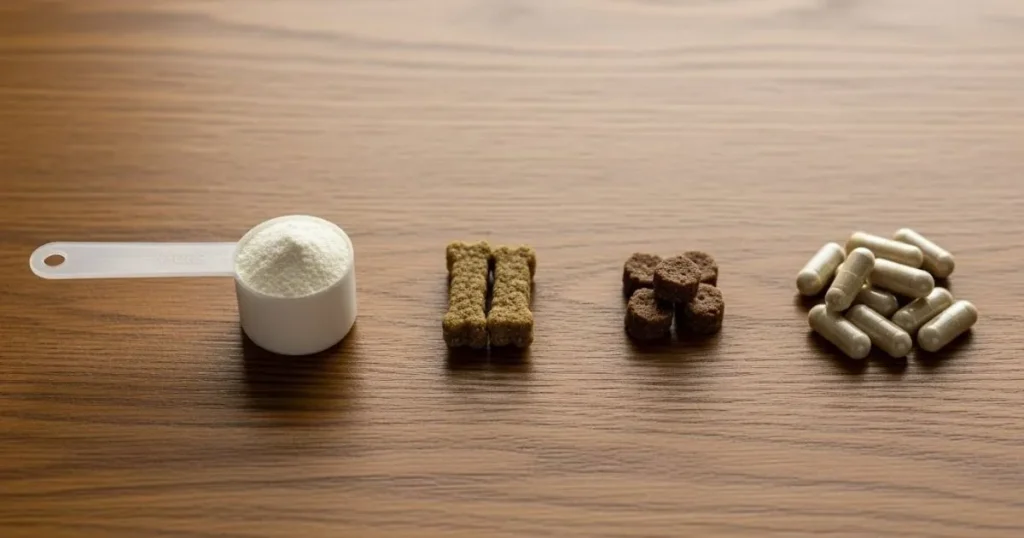
Dog probiotics come in several formats, each with advantages depending on your dog’s preferences and needs:
Powder: Sprinkled over food, powder probiotics are versatile and easy to dose by weight. They work well for picky eaters or dogs who don’t take pills readily. However, they can be messy and may alter food texture.
Chewable Treats: These are the most popular format because dogs often see them as treats rather than medicine. They’re convenient and pre-portioned, though some contain extra ingredients like flavoring or binders that sensitive dogs might react to.
Capsules/Tablets: Pills offer precise dosing and minimal extra ingredients. They’re ideal if your dog takes medication easily, but can be challenging for dogs who resist pills. Some can be opened and sprinkled on food.
Paste/Gel: Less common but useful for short-term use or dogs who won’t eat other formats. These are typically more expensive per dose.
Choose the format that matches your dog’s eating habits and your convenience preferences. Consistency matters more than format—the best probiotic is one you’ll actually give your dog regularly.
✔️ Storage & Stability
Probiotics are living organisms, which means they’re sensitive to environmental conditions. Storage requirements directly impact product effectiveness:
Refrigerated vs. Shelf-Stable: Some probiotics require refrigeration to maintain bacterial viability, while others are formulated to remain stable at room temperature. Neither is inherently superior—shelf-stable probiotics often use protective technologies or spore-forming bacteria, while refrigerated products may contain more delicate strains.
Shelf-stable advantages: More convenient for travel, shipping, and everyday storage. No worry about power outages affecting your supply.
Refrigerated considerations: If purchasing online, verify the product is shipped with cold packs or during appropriate weather. Once opened, follow storage instructions carefully.
Moisture protection: Look for packaging that protects against moisture, which can reduce probiotic viability. Individual packets or bottles with desiccant packs are good signs.
Always check the expiration date before purchasing and store products exactly as directed on the label.
✔️ Ingredients to Avoid
While examining probiotic supplements, watch out for unnecessary additives that don’t support your dog’s health:
- Artificial colors: Red 40, Yellow 5, and similar dyes serve no nutritional purpose and some dogs may be sensitive to them
- Excessive fillers: While some binding agents are necessary in chews and tablets, excessive corn, wheat, or soy fillers may not be ideal for all dogs
- Artificial preservatives: BHA, BHT, and ethoxyquin are controversial preservatives some owners prefer to avoid
- Unnecessary sugars: While palatability matters, excessive sugars or corn syrup aren’t beneficial
- Common allergens: If your dog has food sensitivities, check for chicken, beef, dairy, or grain ingredients that might trigger reactions
The ingredient list should be relatively short and focused on the probiotic strains, minimal necessary binders, and perhaps natural flavoring.
✔️ Size & Age Appropriateness
Dog probiotics aren’t one-size-fits-all. Consider your dog’s specific characteristics:
Weight-based dosing: Quality products provide clear dosing instructions based on your dog’s weight. A 10-pound Chihuahua needs a different dose than a 70-pound Labrador.
Life stage formulations: Some probiotics are specifically designed for puppies, adults, or senior dogs. Puppy formulas may include additional digestive support for developing systems, while senior formulas might address age-related digestive changes.
Breed-specific considerations: Large and giant breeds sometimes have different digestive sensitivities than smaller dogs. While not always necessary, some brands offer size-specific formulations.
Always follow the manufacturer’s dosing guidelines and consult your veterinarian if your dog falls between size categories or has special needs.
✔️ Made in USA / Quality Standards
Manufacturing standards significantly impact product safety and quality:
Made in USA: Products manufactured in the United States follow FDA regulations for animal supplements, providing an extra layer of quality assurance. The label should clearly state where the product is made.
Third-party testing: Some manufacturers use independent laboratories to verify their products contain what the label claims and are free from contaminants. Look for mentions of third-party testing or certificates of analysis.
GMP certified facilities: Good Manufacturing Practice (GMP) certification indicates the facility follows strict quality control procedures.
NASC Quality Seal: The National Animal Supplement Council (NASC) provides a quality seal for companies meeting their stringent requirements. This is a valuable indicator of commitment to quality.
Batch numbers: Responsible manufacturers include batch or lot numbers on packaging, allowing product tracking if issues arise.
✔️ Veterinary Research & Brand Transparency
Established brands with veterinary backing tend to be more reliable:
Veterinary formulation: Products developed with veterinary nutritionist input or backed by veterinary research are generally more trustworthy than those without professional involvement.
Brand reputation: Companies that have been in the pet supplement industry for years and have positive reputations among veterinarians and dog owners are safer bets.
Transparent labeling: The best brands clearly list all ingredients, strain names, CFU counts, and sourcing information. Vague labels or “proprietary blends” without specifics should raise concerns.
Customer support: Reputable companies offer accessible customer service and are willing to answer questions about their formulations and sourcing.
Research citations: While not required, brands that reference published research or studies supporting their formulations demonstrate commitment to evidence-based products.
Are Dog Probiotics Safe?
For most healthy dogs, probiotics are generally considered safe when used as directed. These supplements contain bacteria strains that naturally occur in the canine digestive system, and adverse reactions are uncommon.
General Safety Considerations:
Most dogs tolerate probiotics well, particularly when introduced gradually. The beneficial bacteria in quality products are non-pathogenic (not disease-causing) and have been studied for safety in canine use.
That said, every dog is different. Some dogs may experience mild digestive changes when first starting probiotics, such as temporary gas or slight stool changes. These typically resolve within a few days as the dog adjusts. Starting with a lower dose and gradually increasing to the recommended amount can minimize these effects.
When to Consult Your Veterinarian:
Always talk to your vet before starting probiotics if your dog:
- Has a compromised immune system or serious health condition
- Is currently taking medications (probiotics can potentially interact with some drugs)
- Shows signs of serious illness (vomiting, bloody stool, lethargy, loss of appetite)
- Has a history of severe food allergies or sensitivities
- Is pregnant or nursing
- Is scheduled for surgery or has recently undergone a procedure
Special Populations:
Puppies: Young puppies have developing digestive systems. While some probiotics are formulated specifically for puppies, consult your veterinarian before giving probiotics to dogs under 12 weeks old.
Senior Dogs: Older dogs often benefit from digestive support, but they may also have underlying health conditions that require veterinary guidance before starting new supplements.
Immunocompromised Dogs: Dogs with weakened immune systems (from illness, medication, or other factors) should only receive probiotics under veterinary supervision, as there’s a theoretical risk of the probiotic bacteria causing problems in severely compromised animals.
Dogs with Sensitive Stomachs: Ironically, some dogs with very sensitive digestive systems may initially react to probiotics. Start with minimal doses and monitor closely, or choose a product with fewer strains initially.
Remember that probiotics are supplements, not medications. They don’t replace proper veterinary care for sick dogs. If your dog’s symptoms persist or worsen while taking probiotics, discontinue use and consult your veterinarian.
How to Choose the Right Probiotic for Your Dog
Selecting the best dog probiotics for your pet doesn’t have to be overwhelming. Follow this step-by-step approach to make an informed decision:
Step 1: Identify Your Dog’s Needs
Consider why you’re interested in probiotics:
- Daily digestive support and general wellness
- Support during diet changes
- Recovery following antibiotic treatment
- Managing occasional digestive upset
- Age-specific support (puppy or senior)
Step 2: Check With Your Vet
Especially important if your dog has existing health conditions, is very young or old, or is on medications. Your veterinarian can recommend specific products or strains based on your dog’s individual needs.
Step 3: Review the Strain List
Look for products containing multiple, clearly-named beneficial strains like Lactobacillus, Bifidobacterium, or Enterococcus species. Avoid products with vague “proprietary blend” descriptions.
Step 4: Verify CFU Count
Ensure the product contains at least 1 billion CFUs per dose and guarantees this count through expiration. Match the dose to your dog’s weight according to package directions.
Step 5: Choose the Right Format
Consider your dog’s preferences:
- Picky eaters may do better with tasty chews
- Dogs who gulp treats might need powder mixed in food
- Medication-compliant dogs can take capsules
Step 6: Read the Full Ingredient List
Scan for potential allergens, unnecessary additives, or ingredients your dog has reacted to in the past.
Step 7: Check Manufacturing Quality
Prioritize products made in USA, from NASC-certified companies, or with third-party testing verification.
Step 8: Read Recent Customer Reviews
On Amazon and other platforms, focus on reviews from dogs similar to yours in size, age, and needs. Look for patterns in feedback about effectiveness, palatability, and any issues.
Step 9: Compare Value
Calculate cost-per-dose based on your dog’s weight. Sometimes a pricier product is actually more economical if doses are more concentrated.
Step 10: Plan for Consistency
Choose a product you can easily obtain regularly (Amazon Subscribe & Save can help) and that fits your budget for long-term use, since probiotics work best when given consistently.
Popular Types of Dog Probiotic Products
When browsing Amazon or pet stores, you’ll find probiotics marketed for different purposes and preferences. Understanding these categories can help you narrow your search. Remember, these are general product types, not medical treatments for specific conditions.
Daily Maintenance Probiotics
These are formulated for everyday use as part of a healthy dog’s regular routine. They typically contain moderate CFU counts (1-5 billion) and well-researched strains suitable for long-term use.
Daily maintenance probiotics often come as palatable chews or powders that dogs readily accept. They’re designed to support ongoing digestive balance and general gut health in dogs without specific digestive concerns.
These work well for dog owners who want to proactively support their pet’s digestive system or who’ve noticed their dog does better with consistent probiotic supplementation.
Probiotic Powders for Food
Unflavored or lightly flavored powders offer versatility for mixing into your dog’s regular meals. These are particularly useful for:
- Dogs who are suspicious of new treats or chews
- Owners feeding homemade or fresh food diets
- Situations requiring precise weight-based dosing
- Multi-dog households where individualized dosing is needed
Powders often contain minimal extra ingredients, focusing primarily on probiotic strains and perhaps some prebiotic fiber. They may offer good value since you control portion sizes exactly.
Probiotic Chews
By far the most popular format, chewable probiotics are designed to taste appealing to dogs. They’re convenient, pre-portioned, and easy to give as a daily supplement.
Quality probiotic chews balance palatability with clean ingredients, avoiding excessive sugars or artificial components while still being something dogs look forward to eating.
These work best for food-motivated dogs and owners who want supplement time to be simple and stress-free. Many dog owners report that their pets think they’re getting a treat rather than taking a supplement.
Probiotics Combined with Fiber
Some products combine probiotic strains with digestive fibers (prebiotics) like pumpkin, psyllium, or chicory root. These synbiotic formulas aim to provide both beneficial bacteria and the nutrients to help them thrive.
These combination products are often marketed toward supporting regular bowel movements and stool consistency. They may be useful for dogs who occasionally experience digestive irregularity.
However, dogs with sensitive stomachs should introduce these gradually, as the fiber component can cause temporary gas or stool changes if introduced too quickly.
Targeted Formulas
You’ll also find probiotics marketed for specific life stages or situations:
- Puppy probiotics: Typically lower CFU counts appropriate for developing systems
- Senior dog probiotics: May include additional digestive enzymes or joint support ingredients
- Small breed formulas: Smaller serving sizes and dose concentrations
- Post-antibiotic probiotics: Higher CFU counts to help repopulate gut bacteria
While these specialized formulas can be helpful, many dogs do well with general, high-quality probiotics for dogs regardless of specific marketing claims.
FAQ – Dog Probiotics
Can puppies take probiotics?
Some probiotics are specifically formulated for puppies and can be given to young dogs. However, puppies under 12 weeks old should only receive probiotics if recommended by your veterinarian. Puppy-specific probiotics typically contain lower CFU counts and strains that are well-tolerated by developing digestive systems. Always follow weight-based dosing instructions carefully for young dogs.
How long do dog owners usually use probiotics?
This varies depending on why the probiotic was started. Some dog owners use probiotics short-term (2-4 weeks) during specific situations like diet changes or recovery from antibiotics. Others include probiotics as a permanent part of their dog’s daily routine for ongoing digestive support. There’s no set timeline—many dogs take probiotics indefinitely without issues. Consult your veterinarian if you’re unsure about duration for your specific situation.
Can probiotics be given with dog food?
Yes, most probiotics for dogs can be given with food. In fact, many probiotic powders and chews are designed to be mixed with or given alongside meals. Giving probiotics with food may actually help buffer the beneficial bacteria as they pass through the stomach’s acidic environment. Some owners prefer giving probiotics with food to mask the supplement in meals, while others give chewable probiotics separately as treats. Either approach typically works fine.
Do all dogs need probiotics?
No, not all dogs require probiotic supplementation. Many healthy dogs with balanced diets and no digestive issues do perfectly fine without probiotics. These supplements are most commonly considered for dogs experiencing occasional digestive upset, those undergoing diet transitions, dogs recovering from antibiotics, or as part of a wellness routine for dogs with historically sensitive stomachs. Your dog’s individual health, diet quality, and any specific issues should guide whether probiotics make sense for your pet.
What’s the difference between probiotics and digestive enzymes?
Probiotics are beneficial bacteria that support gut microbiome balance. Digestive enzymes are proteins that help break down food components (proteins, fats, carbohydrates) into nutrients your dog can absorb. While both support digestive health, they work in different ways. Some supplements contain both probiotics and enzymes, while others focus on one or the other. Dogs with specific digestive issues might benefit more from one type over the other—consult your vet if you’re unsure which is appropriate.
Are probiotics safe to give with medications?
For most medications, probiotics are safe to give simultaneously. However, timing matters with antibiotics. Since antibiotics kill bacteria indiscriminately (both harmful and beneficial), giving probiotics at the exact same time as antibiotics may reduce the probiotic’s effectiveness. Many veterinarians recommend spacing them several hours apart during antibiotic treatment, then continuing probiotics for several weeks after antibiotics finish. Always inform your vet about any supplements your dog takes to check for potential interactions.
How quickly do probiotics start working?
Most dog owners report noticing changes within 3-7 days of starting probiotics, though this varies considerably by individual dog and the reason for supplementation. Some dogs show improvement in stool consistency within a few days, while others take several weeks to respond. Consistency is key—probiotics work best when given daily over time, allowing beneficial bacteria to establish themselves in the gut. If you see no change after 4-6 weeks of consistent use, consult your veterinarian about whether to continue or try a different approach.
Can you give too much probiotic to a dog?
While serious overdose from probiotics is unlikely, giving significantly more than recommended amounts isn’t beneficial and may cause temporary digestive upset like gas, bloating, or loose stools. More bacteria doesn’t necessarily mean better results. Follow the manufacturer’s weight-based dosing guidelines. If you accidentally give an extra dose, monitor your dog for digestive changes but don’t be overly concerned—simply return to the regular dosing schedule.
What should I do if my dog won’t eat probiotic chews?
Try these strategies: mix powder probiotics into wet food or a favorite treat like plain yogurt, open capsules and sprinkle the contents on food, try a different flavor or brand of chew, or crush chews and mix with something appealing like peanut butter (ensure it’s xylitol-free). Some dogs who refuse one format readily accept another. If your dog is particularly resistant to supplements in general, consult your veterinarian about whether probiotics are necessary for your dog’s specific situation.
Do probiotics need to be refrigerated after opening?
This depends on the specific product formulation. Some probiotics for dogs require refrigeration to maintain bacterial viability, while others are shelf-stable and can be stored at room temperature. Always check the product label for storage instructions and follow them exactly. Shelf-stable probiotics often use protective technologies or spore-forming bacteria that tolerate temperature variations better than strains requiring refrigeration. Neither type is inherently superior if stored correctly.
Final Buyer Advice
Choosing probiotic supplements for dogs doesn’t need to be complicated, but it does require some attention to detail. The market offers hundreds of options, ranging from budget-friendly powders to premium veterinary-formulated chews, and not all products deliver the same quality or value.
Here’s what matters most:
Focus on products with clearly labeled bacterial strains, guaranteed CFU counts through expiration, and minimal unnecessary ingredients. Prioritize manufacturing quality—look for products made in the USA from reputable companies with transparent labeling practices.
Remember that the best probiotic for your dog is one that:
- Contains strains appropriate for canine digestive health
- Comes in a format your dog will actually consume consistently
- Fits within your budget for long-term use
- Comes from a manufacturer you trust
Affiliate Disclosure: This article contains affiliate links to products on Amazon. If you purchase through these links, we may earn a small commission at no additional cost to you. This helps support our blog and allows us to continue providing helpful content for dog owners.