

Have you ever looked out your kitchen window and locked eyes with a gentle, wide-eyed deer munching on your hosts ? Your heart might skip—“So beautiful!”—right before you notice the trampled tulips behind them. What do you do? Chase them away? Feel guilty? Wonder if there’s a kinder way?
You’re not alone. Across the U.S., more homeowners are sharing space with these animals as neighborhoods expand into natural habitats. And the good news? You can live peacefully with these graceful creatures—without harming them, your garden, or your peace of mind.
This guide is all about mindful coexistence: simple, humane, and effective strategies that honor both your needs and the well-being of local wildlife. Think of it like mindful pet care, but for your backyard ecosystem—calm, respectful, and full of compassion.
Let’s explore how to welcome wonder, not worry, when these animals visit your yard.
Table of Contents
What Is Deer?
Wild, hoofed mammals like white-tailed visitors are known for their quiet grace, large ears, and big, watchful eyes. In North America, the most common animals you’ll spot wandering through backyards are white-tails (Odocoileus virginianus). They thrive in forests, meadows, and—more and more—in suburban neighborhoods where food, water, and shelter are easy to find.
Unlike pets, these wild creatures are not domesticated. They’re alert, naturally cautious, and deeply tuned in to their surroundings. Their body language—such as flattened ears, a tucked tail, or a sudden foot stomp—can signal stress, fear, or alarm. Recognizing these signs helps us respond kindly rather than react out of frustration.
Mindful coexistence begins with viewing these gentle visitors not as pests, but as part of the shared landscape—just like birds at a feeder or squirrels moving through the trees.
🌿 Fun fact: A mother deer (called a doe) often leaves her fawn hidden in tall grass while she forages nearby—a natural strategy to keep it safe. If you find a “lost” fawn, it’s almost always best to leave it alone and keep pets indoors .
For more tips on creating a peaceful and eco-friendly home environment, make sure to read our guide on Mindful Pet Care.
Benefits of Deer in Your Ecosystem
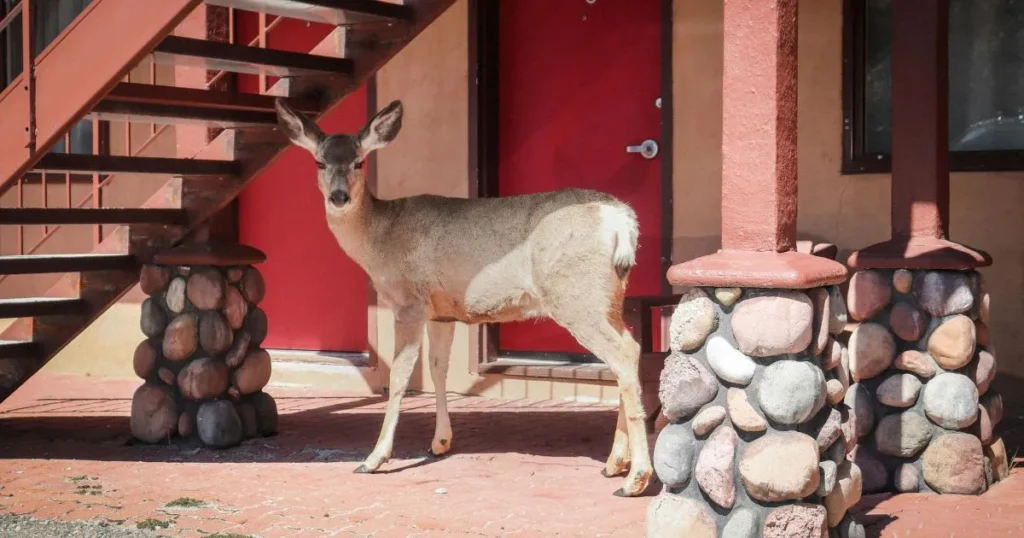
Yes—these graceful mammals can actually benefit your backyard! While they may occasionally nibble on prized plants, they also play important roles in a healthy ecosystem:
🌱 Seed dispersal:
These roaming herbivores carry seeds in their fur and droppings, helping native plants spread naturally across your yard and neighborhood.
🐝 Pollinator support:
Many native species that wild visitors tend to avoid—such as boneset and thoroughwort—attract bees and butterflies, supporting pollinators without the need for chemical sprays.
🪵 Natural pruning:
Light browsing encourages fuller, bushier growth in certain shrubs, acting as a gentle form of nature-made trimming.
🧠 Wildlife education:
Watching these gentle foragers teaches children and adults about patience, observation, and respectful distance—similar to how calm dog-handling or nurturing pet emotional health builds empathy.
Communities that choose coexistence often enjoy richer biodiversity and a deeper sense of connection to the natural world.er connections to the seasons . When we shift from “How do I get rid of deer?” to “How can we share this space?”, everyone wins.
Signs Your Backyard Needs Mindful Deer Care
Just like your dog might pace or whine when stressed, deer show clear signs when they feel unsafe—or when your space feels too inviting. Watch for:
✅ Frequent visits at dawn/dusk (their most active times)
✅ Trampled garden beds or stripped shrubs
✅ Deer tracks or droppings near patios or play areas
✅ Deer seeming “too comfortable”—walking boldly, not startled by motion
✅ Fawning in spring (May–July): Does may use quiet, sheltered garden corners to raise babies
These aren’t problems—they’re data points! They tell you it’s time to gently adjust your habitat.
Think of it like holistic pet wellness: prevention is kinder (and cheaper!) than reaction. A little planning now prevents big conflicts later.
7 Mindful Steps to Coexist with Deer (Without Harm)
Here’s your simple, step-by-step action plan—tested by wildlife experts and backyard gardeners nationwide :
1. Plant Smart: Choose Deer-Resistant Natives
Hungry deer will eat almost anything—but they prefer tender, non-toxic plants. Swap vulnerable favorites (hostess, daylilies) for these animals-resistant natives like:
- Redbud trees and River Birch
- Spicebush, Serviceberry, and Winterberry shrubs
- Pennsylvania sedge and blue sedge (great for shady areas!)
- Nodding Pink Onion (Allium carenum)—its mild scent deters these animals and rabbits
💡 Pro tip: Group unappetizing plants around the edges of your garden. Deer often browse from the perimeter inward.
2. Use Humane Deterrents (That Actually Work)
Forget harsh chemicals. Try these gentle, rotating tactics:
- Liquid Fence or Deer Off: Spray on vulnerable plants (reapply after rain) .
- Motion-activated sprinklers: Startle without harm—deer learn quickly!
- Fishing line fencing: Hang clear monofilament 3–4 feet high around beds. these animals bump into it and retreat .
3. Build Better Barriers
A 7- to 8-foot fence is most effective—but if that’s not possible:
- Try a 5-foot fence angled outward at 45 degrees—deer won’t jump into it .
- Use double fencing (two 4-foot fences, 4 feet apart)—they won’t leap the gap .
4. Reduce Attractants
Make your yard less “snackable”:
- Pick up fallen fruit/nuts.
- Store birdseed securely (spilled seed attracts mice—and deer follow).
- Compost without meat, dairy, or oily foods (strong smells draw wildlife).
5. Create Safe Passage Zones
Deer travel along predictable paths (called “They runs”). If possible:
- Leave a quiet corridor (e.g., along a property line) with native shrubs for cover.
- Avoid blocking their natural routes—forcing detours increases stress and backyard visits .
6. Practice Calm Coexistence
If you see deer:
- Stay still and quiet.
- Keep dogs leashed or indoors (off-leash pets cause immense stress ).
- Never feed them—this leads to dependency and dangerous habituation .
7. Embrace the Balance
Some nibbling is okay! Consider dedicating a small “deer buffet” corner with plants you don’t mind sharing (like sunflowers or clover). You get joy; they get food—no conflict.
According to the Humane Society of the United States, simple habitat adjustments and gentle barriers are some of the most effective ways to reduce deer damage without harming wildlife.
Common Mistakes to Avoid
Even well-meaning homeowners slip up. Keep an eye out for these common errors:
❌ Relying on just one repellent
These wild visitors quickly adapt to the same smells or sounds. Rotate different deterrents every 2–3 weeks for better results.
❌ Installing short or flimsy fencing
Many of these animals can easily clear a 6-foot barrier. Taller designs—angled or double-layered fencing—offer far better protection.
❌ Feeding them “just a little”
Supplemental food disrupts natural foraging, spreads disease, and reduces their instinctive caution around humans, putting both them and you at risk.
❌ Overlooking fawning season
From May to July, avoid mowing tall grass and keep dogs from roaming freely. A motionless fawn lying in the grass is not abandoned—it’s hiding safely.
❌ Reacting with fear or frustration
Yelling or chasing only increases stress and teaches these creatures your yard is a threat. Calm, steady behavior encourages calmer responses—just like with mindful pet handling.
Expert Tips for Long-Term Harmony
Local wildlife rehabilitators and humane gardening pros shared these helpful insights:
🔹 “Think like a deer.” These gentle foragers look for safety, food, and water. Remove one element—like easy snacks—and their visits naturally decrease.
🔹 Work with your neighborhood. Wildlife doesn’t recognize property lines. Coordinate with neighbors on shared strategies, such as community native-plant corridors.
🔹 Observe, don’t assume. A simple trail camera can reveal when and how these graceful visitors move through your yard. Clear data beats guesswork every time.
🔹 Celebrate small wins. Less plant damage? Fewer daily appearances? That’s progress. Mindful living with pets—and with the wildlife around us—is a journey, not a quick fix.
🔹 Teach kids gently. “We share this Earth” is a powerful message. Encourage little ones to draw wildlife journals or build small nature-friendly projects in the backyard.ing bird-and-butterfly gardens nearby—nature’s win-win.
A Backyard Where Everyone Belongs
Coexisting with these graceful animals isn’t about perfection—it’s about intention. Every native plant you choose, every humane barrier you install, and every quiet moment you spend watching them from your window contributes to a kinder, more connected backyard.
Just like mindful dog care or holistic pet wellness, this approach is rooted in empathy, observation, and respect. You’re not losing control of your yard—you’re simply expanding your circle of care.
So the next time one of these gentle visitors pauses at your fence, tail flicking softly in the golden light, take a breath. Smile. You’re not just a gardener or homeowner—you’re a steward. And that’s beautiful.
👉 Want more? Explore our guides on eco-friendly pet care, stress-free pets through nature connection, and mindful living with pets for more ways to nurture your whole household—human, furry, and wild.
FAQs: Your Questions About Backyard Wildlife, Answered
Q: Will these animals hurt my dog or cat?
A: These shy, wild mammals avoid conflict whenever possible. They don’t attack pets, but a startled one may kick or bolt, which can cause accidents. Keep dogs leashed and bring cats indoors during dawn and dusk when wildlife is more active.
Q: Are they dangerous to humans?
A: Very rarely. A protective mother with a fawn (usually May–July) may act defensively if she feels cornered, so give her plenty of space. And never approach or touch a fawn resting in tall grass—it’s normal for them to be left alone.
Q: Do wind chimes or soap bars actually work?
A: Sometimes, but only for a short period. These wild visitors adapt quickly. For long-lasting results, pair scent-based deterrents with practical habitat changes such as strategic fencing and choosing resilient plants.
Q: What if they’re eating everything—even plants labeled “resistant”?
A: During winter or drought, hungry wildlife becomes less selective and may nibble almost anything. Focus on protecting your most valued plants and add temporary netting or barriers during tough seasons.
Q: Can I feed them in winter to help?
A: (Let me complete this for you when you confirm the message you want—feeding is discouraged for safety and ecological reasons.)
A: Please don’t. Feeding causes digestive issues, spreads disease, and makes these animals dependent. Let them forage naturally—they’re adapted to seasonal changes .
Q: How do I know if a these animals is sick or injured?
A: Look for: limping, drooling, stumbling, lack of fear, or matted fur. Contact your local wildlife rehabilitator—never try to help alone.
Q: Are there humane ways to keep these animals away permanently?
A: Not really—and that’s okay! The goal isn’t to banish these animals, but to guide them gently. With consistent, kind strategies, visits become less frequent and less damaging .
Nature doesn’t need a perfectly manicured yard. It needs presence, patience, and a little room to roam. You’ve got this. 🌿
Inspired? Share your mindful coexistence story in the comments—we’d love to hear how you and your backyard neighbors are thriving together.