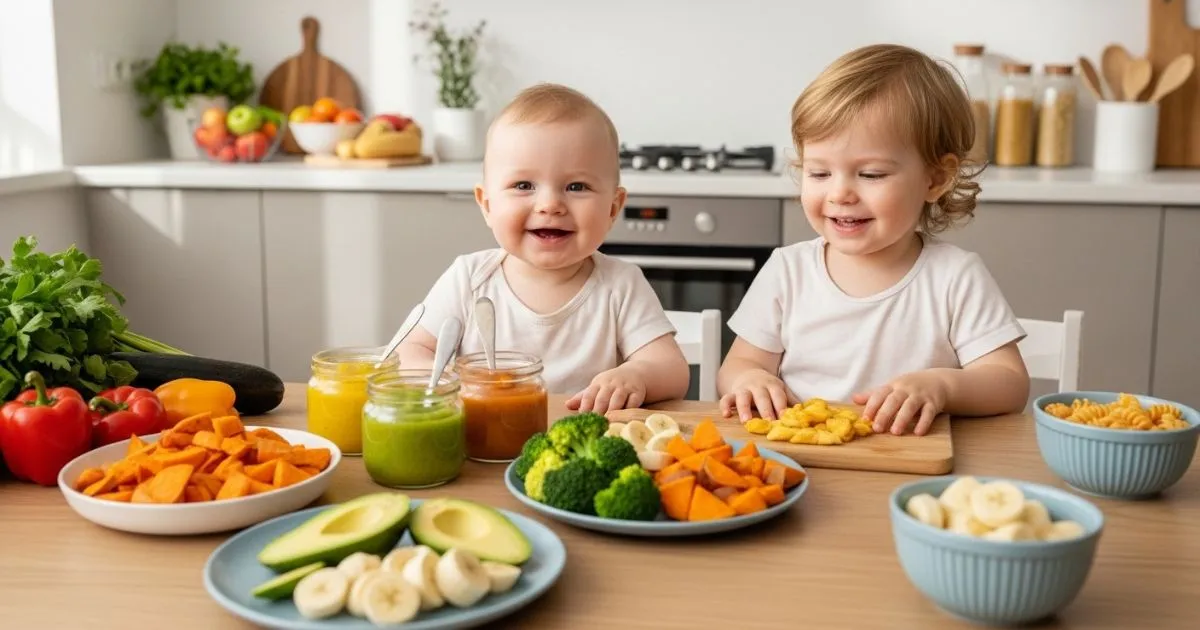
Starting your baby on solid foods is one of the most exciting milestones in parenthood. But it can also feel overwhelming, especially when you’re trying to make the healthiest choices for your little one. If you’ve been researching the best organic baby food options, you’re not alone—more parents than ever are choosing organic to reduce their child’s exposure to pesticides, additives, and processed ingredients.
This guide will walk you through everything you need to know about organic baby food, from understanding what “organic” really means to practical tips for making homemade organic baby food and choosing quality store-bought options. Whether you’re preparing your first batch of organic baby purées or navigating baby-led weaning with organic finger foods, you’ll find the information you need to feed your baby and toddler with confidence.
What Is Organic Baby Food?
When you see “organic” on a baby food label, it means the product meets specific standards set by the United States Department of Agriculture (USDA). Foods labeled as “USDA Organic” or displaying the green USDA Organic seal must be made with at least 95% organic ingredients. This means the fruits, vegetables, grains, and other ingredients were grown without synthetic pesticides, chemical fertilizers, or genetically modified organisms (GMOs).
For products labeled “100% Organic,” every ingredient must be organic. You might also see “made with organic ingredients,” which means at least 70% of the ingredients are organic, though these products can’t display the USDA Organic seal.
Table of Contents
Homemade vs Store-Bought Organic Baby Food
Both homemade organic baby food and store-bought organic options have their place in your feeding journey. When you make baby food at home, you have complete control over ingredients and can buy organic produce directly from farmers markets or grocery stores. Store-bought organic baby food offers convenience and consistency, with tested recipes and clearly labeled ingredients.
The best choice often depends on your schedule, budget, and preferences. Many parents use a combination of both approaches—preparing homemade purées when time allows and keeping pouches on hand for busy days or travel.
Benefits of Organic Baby Food for Babies & Toddlers
Choosing organic baby food isn’t just a trend—it’s a decision rooted in wanting the best nutrition for your child during critical developmental years. Here are some key benefits that draw parents to organic options:
Reduced Exposure to Pesticides
Babies and toddlers are more vulnerable to pesticide residues than adults because their bodies and brains are still developing. Organic farming practices prohibit the use of synthetic pesticides, which means organic produce typically has lower pesticide residues. While all baby food in the US must meet safety standards, choosing organic provides an extra layer of protection during these formative years.
Fewer Additives and Preservatives
Many conventional baby foods contain added sugars, salts, and preservatives that babies don’t need. Organic baby food regulations are stricter about what can be added to products, resulting in cleaner ingredient lists. When you check the label on quality organic baby food, you’ll typically see simple, recognizable ingredients—just the fruits, vegetables, grains, or proteins you’d use in your own kitchen.
Ingredient Transparency
Organic certification requires detailed documentation and regular inspections, which means more transparency about how food is grown and processed. For parents who want to know exactly what they’re feeding their baby, organic products offer peace of mind through verified standards and clearer labeling.
Building Healthy Eating Habits Early
Starting with organic, whole-food ingredients from the beginning can help establish a foundation for healthy eating habits. Babies exposed to the natural flavors of fruits and vegetables—without added sugars or excessive salt—may be more accepting of diverse, nutritious foods as they grow into toddlerhood and beyond.
Homemade vs Store-Bought Organic Baby Food
Both approaches to organic baby food have advantages, and understanding the pros and cons can help you make the best choice for your family.
Homemade Organic Baby Food
Pros:
- Complete control over ingredients and texture
- Often more cost-effective, especially when buying organic produce in season
- Ability to introduce your baby to the same foods the family eats
- Freshness and customization for your baby’s preferences
- Great for introducing variety beyond what’s available in stores
Cons:
- Requires time for shopping, preparation, and cleanup
- Needs proper storage containers and possibly equipment like a blender or food processor
- Requires planning ahead for batch cooking
- Food safety considerations around storage and reheating
Store-Bought Organic Baby Food
Pros:
- Ultimate convenience for busy schedules
- Consistent nutrition and tested recipes
- Perfect for travel and on-the-go feeding
- Long shelf life for pantry storage
- Pre-portioned servings reduce waste
Cons:
- More expensive per serving than homemade
- Limited variety compared to what you can make at home
- Less control over texture and ingredient combinations
- Some products may contain ingredients you’d prefer to avoid
The truth is, there’s no need to choose one approach exclusively. Most parents find that a hybrid approach works best—making batches of homemade organic baby food when possible while keeping store-bought options available for convenience.
Best Organic Baby Food Ideas by Stage
As your baby grows, their nutritional needs and eating abilities evolve. Here’s how to approach organic feeding at each stage:
If you’re looking for a simple way to plan organic meals for every stage, The Big Book of Organic Baby Food offers clear, age-by-age recipes many parents find helpful.
👉 You can see it here on Amazon.
First Purées (Around 6 Months)
When your baby is ready to start solids—typically around 6 months when they can sit up with support and show interest in food—organic baby purées are a gentle introduction. The best first organic baby foods are single-ingredient purées that let you watch for any sensitivities:
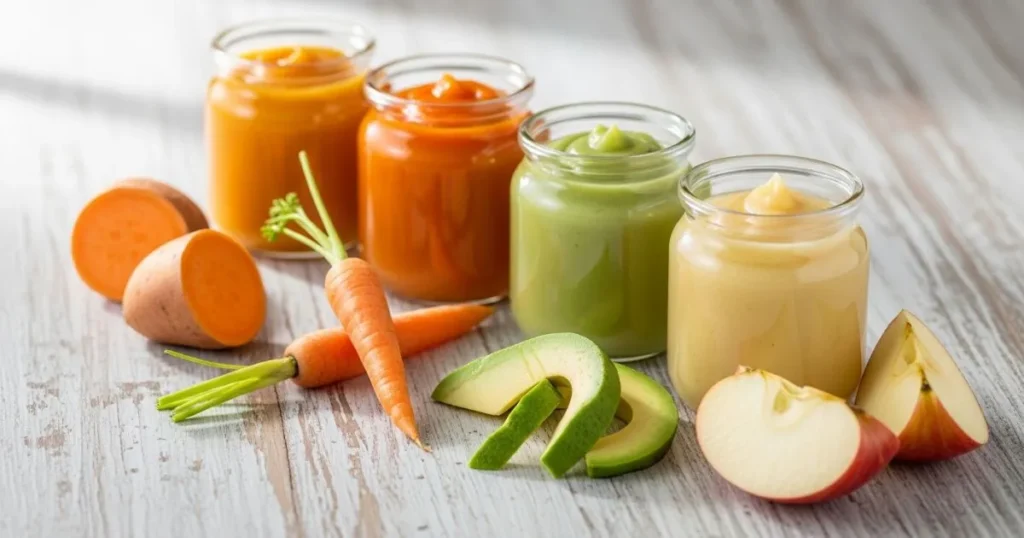
- Sweet potato: Rich in beta-carotene and naturally sweet, making it a favorite first food
- Avocado: Creamy texture and healthy fats support brain development
- Banana: Easy to mash and naturally sweet
- Peas: Mild flavor with protein and iron
- Butternut squash: Smooth texture and subtle sweetness
- Carrots: Classic first food, though cook until very soft
- Apples: Cook and purée for easy digestion
Start with very smooth purées and watch for signs of readiness. As your baby gets comfortable, you can begin combining flavors—sweet potato and apple, peas and mint, or carrot and pear are delicious organic combinations.
Finger Foods & Baby-Led Weaning (8-12 Months)
Baby-led weaning organic food is growing in popularity as parents introduce soft, manageable pieces their babies can self-feed. This approach lets babies explore textures and develop motor skills while eating alongside the family.
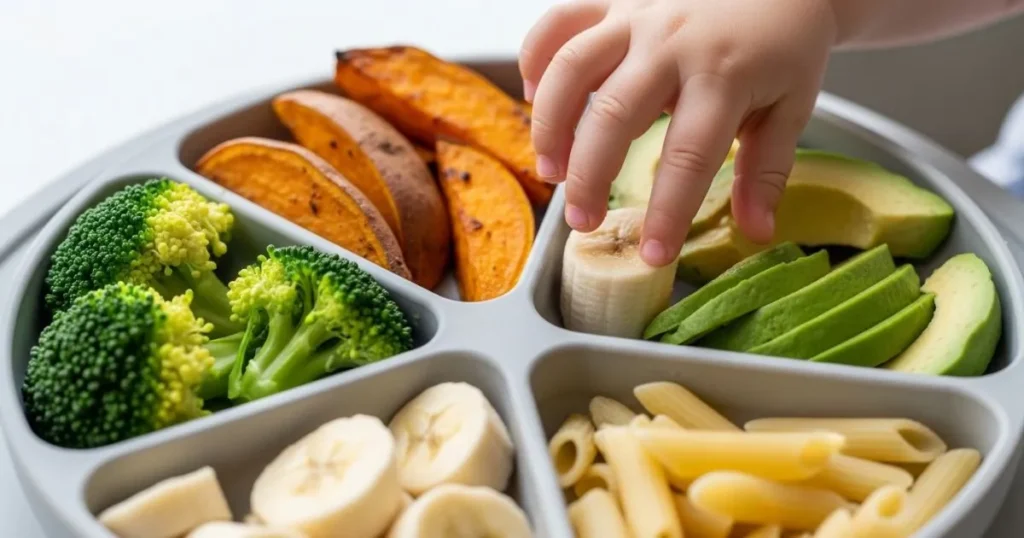
If you’re exploring baby-led weaning with organic foods, having the right tools makes a big difference.
👉 You may also like our guide to the best baby-led weaning tools and easy recipes for 2026, approved by parents.
Great organic finger food options include:
- Steamed broccoli florets: The little trees are perfect for baby hands to grasp
- Roasted sweet potato wedges: Soft enough to gum but substantial enough to hold
- Ripe avocado slices: Rolled in ground oats or almond meal for easier gripping
- Banana spears: Cut lengthwise so babies can hold them
- Well-cooked pasta: Try whole grain organic varieties cut into manageable pieces
- Soft-cooked apple slices: Steamed or roasted until very soft
- Strips of organic chicken or turkey: Shredded or cut into safe, soft pieces
- Scrambled eggs: Made with organic eggs and cooked soft
- Organic toast strips: Spread with mashed avocado or nut butter (if no allergy concerns)
The key with baby-led weaning is ensuring foods are soft enough to squish between your fingers and cut into sizes that prevent choking—generally pieces about the size of your pinky finger that babies can grasp with their palm.
Toddler Meals (12+ Months)
Once your baby reaches toddlerhood, the world of healthy food for babies and toddlers expands significantly. At this stage, toddlers can eat modified versions of family meals made with organic ingredients:
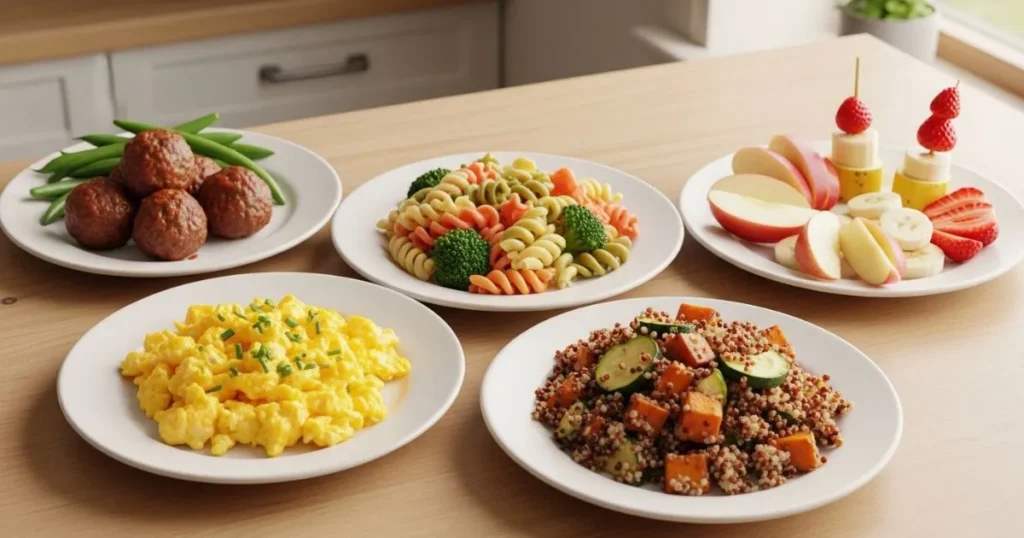
- Organic pasta dishes: Whole grain pasta with tomato sauce and hidden vegetables
- Mini frittatas: Made with organic eggs and chopped vegetables
- Grain bowls: Quinoa or brown rice with roasted vegetables and protein
- Homemade organic meatballs: Made with grass-fed beef or ground turkey
- Smoothies: Blend organic fruits with leafy greens and full-fat yogurt
- Whole grain pancakes: Made with organic flour and topped with fruit
- Bean dishes: Black beans, chickpeas, or lentils mashed or in soft forms
- Organic cheese and crackers: Paired with fruit for balanced snacks
Once your baby reaches toddlerhood, meal planning becomes easier—but choosing balanced meals still matters.
👉 You may also enjoy our guide to the best toddler meals with 10 easy recipes parents love.
At this stage, family meals become easier as your toddler can eat most of what you’re eating, just modified for safety and served in smaller portions.
Recommended Resource for Parents
If you’re feeling excited about providing organic options but unsure where to start with recipes and meal planning, “The Big Book of Organic Baby Food: Baby Purées, Finger Foods, and Toddler Meals For Every Stage” is a resource many parents find incredibly helpful.
This comprehensive cookbook guides you through every feeding stage with organic baby food recipes specifically designed for babies and toddlers. What makes it particularly valuable is its stage-by-stage approach—you’ll find recipes for smooth first purées, chunkier textures for advancing eaters, finger foods perfect for baby-led weaning, and family-friendly toddler meals.
The book takes the guesswork out of what to make and when to introduce it. Rather than searching for individual organic baby food recipes online, you’ll have everything organized in one place. It includes information on proper storage, batch cooking tips, and how to adapt recipes based on what’s in season—which is especially helpful when you’re trying to keep costs down while buying organic.
If you’d like a practical, all-in-one guide for your organic baby food journey. It’s particularly helpful for parents who want variety beyond the standard grocery store options and appreciate having tested recipes at their fingertips.
Many parents keep it as a reference through those first few years, making it a worthwhile investment if you’re planning to regularly prepare homemade organic baby food. 👉 You can check the book on Amazon here to see if it fits your baby’s feeding stage.
How to Start Organic Baby Food at Home (Simple Tips)
Making homemade organic baby food is easier than many parents expect. Here are practical tips to get started without stress:
Start Small and Build Gradually
You don’t need to make everything from scratch immediately. Start with one or two simple organic baby purées each week. Sweet potato, banana, and avocado require minimal equipment and preparation. As you get comfortable, expand your repertoire with more complex recipes and combinations.
Batch Cooking Saves Time
Set aside a few hours once or twice a week to prepare multiple batches of organic baby food. Cook several vegetables or fruits at once, purée or prepare them for the appropriate stage, and freeze in ice cube trays or small containers. Once frozen, pop the cubes into labeled freezer bags. This gives you ready-made portions for weeks.
Invest in Basic Equipment
You don’t need expensive baby food makers. A regular blender, food processor, or immersion blender works perfectly for making smooth purées. For baby-led weaning, you’ll mainly need good cutting boards, sharp knives, and basic cooking tools you already own.
Buy Organic Strategically to Save Money
Not all produce needs to be organic to reduce pesticide exposure significantly. Focus your organic budget on the “Dirty Dozen”—produce that typically has higher pesticide residues when grown conventionally. These currently include strawberries, spinach, kale, apples, grapes, peaches, and others. For the “Clean Fifteen” (like avocados, sweet corn, and pineapples), conventional options are generally fine if budget is a concern.
Shop farmers markets at closing time for deals on organic produce, buy frozen organic fruits and vegetables when they’re on sale, and join a CSA (Community Supported Agriculture) box program for seasonal organic produce at lower costs.
Food Safety Basics
When making homemade organic baby food, follow these safety guidelines:
- Wash all produce thoroughly, even organic items
- Cook foods until very soft for young babies
- Cool food quickly before refrigerating or freezing
- Label containers with contents and date
- Use refrigerated baby food within 48 hours
- Use frozen baby food within 3-6 months for best quality
- Never refreeze previously frozen baby food
- Discard any food your baby has eaten from directly after the meal
Keep It Simple
Your baby doesn’t need elaborate recipes. Simple, single-ingredient organic foods provide excellent nutrition. A steamed and mashed organic sweet potato is a complete, nutritious meal for your 6-month-old. As they grow, simple combinations work beautifully—you don’t need to follow complicated recipes to provide healthy, organic meals.
Frequently Asked Questions About Organic Baby Food
Is organic baby food worth it?
Many parents find organic baby food worth the investment, particularly during the first years when babies are developing rapidly and may be more vulnerable to pesticides. While all baby food sold in the US must meet safety standards, organic options provide an extra level of assurance by eliminating synthetic pesticides and limiting additives. Whether it’s “worth it” depends on your family’s priorities and budget. Many families choose a hybrid approach—buying organic for certain foods (especially those on the Dirty Dozen list) while purchasing conventional options for others.
Can I make organic baby food at home?
Absolutely! Making homemade organic baby food is straightforward and gives you complete control over ingredients. Start by purchasing organic fruits, vegetables, grains, and proteins from your grocery store or farmers market. Steam or roast produce until soft, then purée or mash to the appropriate texture for your baby’s stage. For baby-led weaning, simply cut soft-cooked organic foods into safe sizes. Basic kitchen equipment like a blender or food processor is all you need to get started.
Is organic baby food better for toddlers?
Organic food can be beneficial for toddlers just as it is for babies. Toddlers are still developing, and reducing their exposure to pesticides and additives through organic choices may support their health. However, the most important factor is providing a varied, nutrient-rich diet with plenty of fruits, vegetables, whole grains, and proteins—whether organic or conventional. If budget is limited, focus on buying organic for the foods toddlers eat most frequently and those known to have higher pesticide residues.
How do I start baby-led weaning with organic foods?
To begin baby-led weaning with organic food, wait until your baby is around 6 months old and showing signs of readiness (sitting up independently, showing interest in food, and able to bring objects to their mouth). Start with soft, easy-to-grasp organic foods like steamed broccoli florets, roasted sweet potato wedges, or ripe avocado slices. Cut foods into stick shapes about the size of your finger so babies can hold them with their palm while gumming the top. Always supervise meals and ensure foods are soft enough to squish between your fingers. Introduce one new food at a time and watch for any reactions.
For parents who prefer having a printed reference instead of searching for recipes online, this organic baby food cookbook on Amazon can be a practical option to keep on hand.
Conclusion
Choosing the best organic baby food for your little one is about making informed decisions that work for your family—not achieving perfection. Whether you’re making organic baby purées from scratch, practicing baby-led weaning with organic finger foods, purchasing quality store-bought options, or mixing all three approaches, what matters most is that you’re providing nourishing foods with love and attention.
Remember that every baby is different, and what works perfectly for one family might not fit another’s schedule or budget. The beauty of organic baby food—whether homemade or store-bought—is that it offers you options to reduce your baby’s exposure to pesticides and additives while supporting their growth and development.
As you navigate these early eating stages, be patient with yourself and your baby. Some days you’ll have time to prepare elaborate organic baby food recipes; other days, a simple pouch or quickly mashed banana will be exactly what you both need. Both are absolutely fine.
Trust your instincts, consult with your pediatrician about your baby’s specific nutritional needs, and know that by choosing organic options when possible, you’re taking positive steps toward your child’s health. Here’s to happy, healthy eating adventures with your little one—from those very first messy bites to confident toddler meals and beyond!
Affiliate Disclosure: This post contains affiliate links to products we believe may be helpful for parents. If you make a purchase through these links, we may earn a small commission at no additional cost to you. We only recommend resources we genuinely find valuable.